By Rich Harvey, CEO & Founder, propertybuyer.com.au

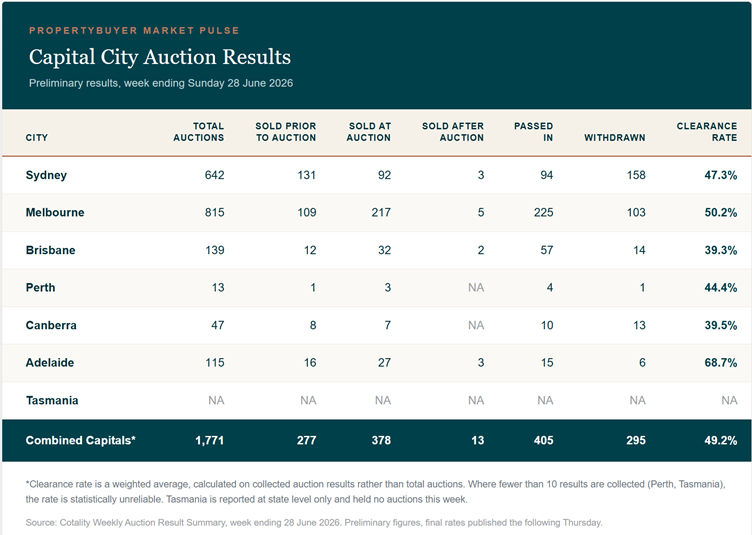
If you only read the headlines, you would think property has caught a cold. Auction clearance rates in Sydney have slipped to around 47 per cent, the weakest since April 2020. Melbourne is sitting in the low 50s and dipped under 50 on some weekends. The national rate is hovering near 49. Open homes are quieter. My inbox is filling with price adjustments and “motivated vendor” texts from agents that I have not seen at this volume in years.
So the obvious question lands in every conversation I have right now: is this the worst time to buy, or the best? Let me argue both sides honestly, because the answer is not the same for everyone, and then I will tell you where I actually land.
First, the case that it is a terrible time to buy
This deserves a fair hearing, not a dismissal. There are real headwinds, and pretending otherwise would insult your intelligence.
- Cost of living is biting. Households are stretched, and for many people a property purchase is simply not on the table this year. That is a genuine constraint, not a sentiment problem.
- Confidence has drained out of the auction room. Fewer than half of homes taken to auction in our two largest cities are selling under the hammer. AMP expects national prices could ease by around 5 per cent over the coming year.
- Borrowing power has already been cut, and not by a little. This is the part many investors have not caught up with yet. Macquarie has become the first lender to strip negative gearing add-backs out of its serviceability calculator for established property, and the major banks are working through the same change. Brokers are reporting borrowing capacity falling by 20 to 30 per cent on identical income and expenses. One pre-approval was reworked from about $1.7 million down to $1.27 million overnight. For a geared investor, that is the difference between buying in the suburb you want and being priced out of it.
- Nobody wants to catch a falling knife. This is the objection I hear most. Why buy today when the same property might be cheaper in three months?
- More stock to choose from. Advertised listings across Sydney, Melbourne and Brisbane are above average. You finally have a genuine field to select from rather than fighting over scraps.
- An abundance of off-market opportunities. When confidence softens, vendors who need to sell quietly come to agents and to our network first. This is where our 25 years of relationships earn their keep, and where the best buying rarely makes it to a portal.
- Vendors are motivated and negotiable. Soft clearance rates do something simple: they shift pricing power to the buyer. Reasonable offers are being met in a way they were not twelve months ago.
- Less competition. The crowd has gone home. You are no longer bidding against ten emotional buyers at every open.
- Time to think. You can do your due diligence properly, inspect twice, check the numbers, and make a considered decision instead of a panicked one. That alone is worth a great deal.
If you stop reading there, you stay on the sidelines. Most people will. Which is exactly why I see opportunity.
Now, the case that it is one of the best windows in years
I have been buying property for clients since 2001, through several cycles. These are some of the most favourable conditions I have seen since the early COVID period, and the reasons are structural, not wishful.
Upgraders, this one is for you
If you are looking to move up, a softer market is your friend, not your enemy. When you sell into a cooler market and buy into a more expensive one, your changeover cost (the gap between what you sell for and what you pay) narrows. The dearer home tends to give up more in dollar terms than the one you are selling. You rarely get to upgrade on better maths than this.
Commercial Buyers and Developers
Commercial buyers were not the target of the budget changes, so you can still negatively gear commercial property. What has happened is that overall confidence has softened, which is precisely the moment to buy a quality asset well rather than chase one in a hot market.
Developers are in a similar position. Site values have eased, and acquisition costs are lower than they were. By the time a project completes in eighteen to twenty four months, the market will almost certainly be in a different, stronger phase. You are buying at the soft point of the cycle and selling into the recovery. That is the whole game.
About that falling knife
Here is the part the nervous buyer needs to sit with. The fear of catching the bottom assumes two things: that the fall will be deep, and that you will be able to see the bottom when it arrives. History is unkind to both assumptions.
Look back over the last forty years and the deepest national peak-to-trough falls on record were around 8 to 9 per cent, in 2017 to 2019 and again in 2022 to 2023. Sydney and Melbourne fell harder in 2022, closer to 13 per cent, before resuming their climb. The point is not that prices never fall. They do. The point is that the falls have been modest and short, and growth has always resumed, because the thing driving prices up never went away.
That thing is supply. We remain structurally undersupplied across this country, and the budget tax changes will not add a single dwelling to the pipeline. They redistribute who pays what. They do nothing to build more homes. So the one force capable of permanently resetting prices lower is simply not in play.
And remember that the Cotality data everyone is quoting is a lagging indicator. No one rings a bell at the bottom. By the time the figures confirm the market has turned, the window has already closed and the competition is back. Waiting for certainty is not caution. It is how you guarantee you miss the discount.
So, who is right?
Both arguments are true at once, and that is the honest answer. It is a genuinely hard year for stretched households and for younger investors who cannot absorb higher early holding costs. I am not going to pretend that group has it easy, because they do not.
But for buyers with capital behind them, a clear strategy, and a time horizon measured in years rather than months, this is a rare and short window. More choice, motivated vendors, and the time to choose well. And here is the part most people miss: the same lending squeeze that is hurting the leveraged investor is quietly thinning the field for everyone else. Every geared buyer who just lost a quarter of their borrowing power is one less competitor at your open home. The people who look back on 2026 with regret will not be the ones who bought. They will be the ones who waited for a bell that never rang.
What to Buy: Established or new?
This debate is about to get loud in investment circles, so let me be direct. The single most important criterion when buying investment grade property is the land content (the land-to-asset ratio). Land appreciates. Buildings depreciate. That principle alone rules out a great many of the shiny off-the-plan apartments and house-and-land packages that the spruikers promote so heavily, often because the commissions are generous rather than because the asset is sound.
There is a trap worth naming here, because the new rules are about to set it. Negative gearing now survives only for new builds, so the tax and lending system is actively nudging investors toward the shiny off-the-plan stock the spruikers love to sell. Chasing the tax break can walk you straight into the weakest long-term asset. Do not let the tax tail wag the investment dog.
If you are weighing established against new, proceed with extreme caution on anything heavily marketed, and start with the long-term goal of the investment. I have written this up in detail here: Old vs New. We help clients buy both, well.
Where to from here
If you have been waiting for the right moment, the uncomfortable truth is that the moment rarely feels comfortable. It feels like this. If you would like a candid view on whether now is your window, and what to buy if it is, reply to this email or reach out to the team. No pressure, just a straight conversation.
To have one of our friendly Buyers' Advocate's contact you, click here to:
 or
or
call us on 1300 655 615 today.
This update is general information only and does not take your personal circumstances into account. It is not financial, tax or investment advice. Please seek your own professional advice before making any property decision.



.svg)
.svg)
.svg)